You Won’t Believe What Ashgabat Hides Behind Its Marble Facade
Ashgabat, Turkmenistan — a city wrapped in white marble and mystery. I went not for the luxury or fame, but for the light, the silence, the surreal frames waiting in plain sight. From golden monuments glowing at sunset to quiet backstreets frozen in time, this city defies expectations. If you're chasing unique photography that stands out, Ashgabat’s scenic spots offer something few places on Earth can: stillness, scale, and a dreamscape few have captured. It is a capital shaped by vision, isolation, and an ambition to stand apart — and through the lens, its contrasts come alive in ways that challenge both perception and preconception.
First Impressions: A City That Glows White
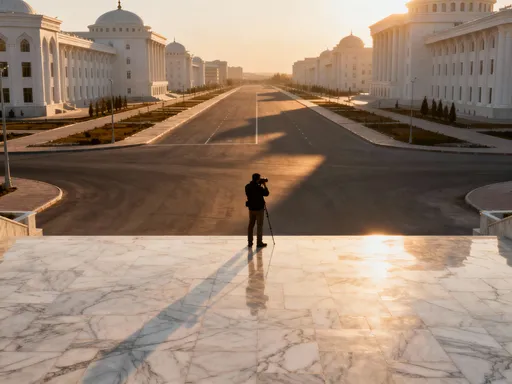
Ashgabat greets the visitor with an almost otherworldly clarity. As the plane descends, the city unfolds beneath a vast desert sky, its buildings shimmering like polished stone in the sun. The first steps outside the airport reveal wide, tree-lined boulevards, meticulously paved and nearly devoid of traffic. The architecture is uniform — gleaming white marble covers nearly every public structure, from government offices to cultural centers, giving the city a monolithic elegance. This is not a place built for clutter or chaos. Every surface seems designed to reflect light, to impress, to endure. For a photographer, this creates an environment of extreme contrast: brilliant highlights against deep shadows, open spaces with minimal distraction, and a sense of order that feels both serene and surreal.
The city’s aesthetic stems from a deliberate national vision. After a devastating earthquake in 1948 and again in the post-Soviet era, Ashgabat was rebuilt with an emphasis on grandeur and resilience. The use of white marble, imported in large quantities, became a symbol of renewal and pride. While some may find the uniformity overwhelming, it offers a rare visual consistency that can be a powerful asset in photography. The absence of visual noise allows the viewer to focus on form, light, and shadow. The smooth, reflective surfaces amplify natural light, especially during the early morning hours when the sun skims the horizon. At this time, the city glows with a soft, diffused radiance, minimizing harsh contrasts and revealing subtle textures in the stone.
For optimal results, photographers should arrive shortly after sunrise. The low angle of the sun casts long shadows that emphasize architectural depth and create natural leading lines along the broad avenues. A polarizing filter can help manage glare on marble surfaces, while a graduated neutral density filter balances exposure between bright skies and darker ground elements. Cameras set to a lower ISO (100–200) will preserve detail in highlights, and shooting in RAW format allows for greater flexibility in post-processing. Because many streets are wide and unobstructed, a tripod can be used effectively even during daylight hours, enabling precise compositions and long exposures if desired. The key is to embrace the stillness — Ashgabat does not rush, and neither should the photographer.
Monumental Scales: Capturing Grandeur on Film
Ashgabat’s skyline is defined by its monuments — towering structures that blend national symbolism with architectural ambition. Among the most iconic is the Independence Monument, a slender column crowned with a bronze statue of Saparmurat Niyazov, the country’s first president, rotating to face the sun throughout the day. Nearby, the Arch of Neutrality stands as a triumphant gateway, once topped by a gold-plated statue of Niyazov himself, now relocated but still part of the city’s visual memory. These monuments are not merely decorative; they are statements of identity, resilience, and sovereignty. For the photographer, they present compelling subjects that demand both scale and context.
Capturing these structures requires thoughtful composition. A wide-angle lens can emphasize height and perspective, but care must be taken to avoid distortion, especially when shooting from ground level. One effective technique is to include foreground elements — a row of trees, a marble bench, or a reflective pool — to anchor the image and provide a sense of depth. Leading lines, such as the straight avenues that radiate from central plazas, naturally guide the eye toward the monument, reinforcing its dominance in the urban landscape. In some cases, shooting from a slight elevation — such as a nearby pedestrian overpass or a low-rise building — can offer a more balanced view, showing the monument in relation to its surroundings.
Drone photography, where permitted, can reveal the full spatial impact of these structures. From above, the geometric precision of Ashgabat’s layout becomes apparent — circular plazas, symmetrical parks, and radial avenues that echo Soviet-era urban planning. However, drone use in Turkmenistan is tightly regulated, and visitors must obtain official permission before flying. Even without aerial access, the visual drama remains accessible. The best times to photograph these monuments are during the golden hours, when the low sun bathes the marble in warm tones and elongates shadows, enhancing three-dimensionality. Midday light, while bright, often flattens surfaces and creates harsh contrasts that are difficult to manage. A small aperture (f/8 to f/16) ensures sharpness from foreground to background, while bracketing exposures helps preserve detail in both highlights and shadows.
Hidden Corners: The Soul Behind the Marble
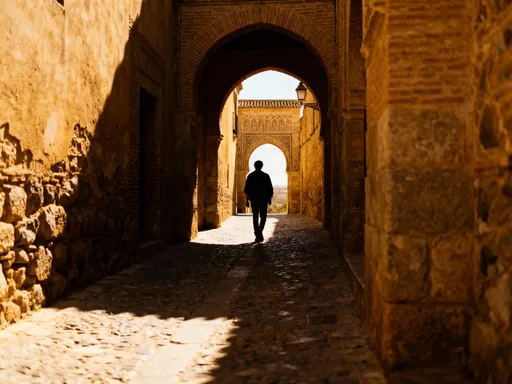
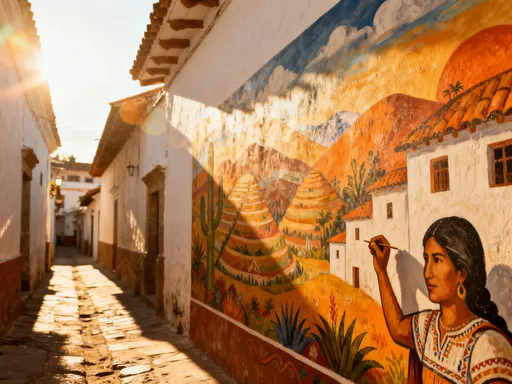
Beyond the gleaming façades and grand plazas lies another Ashgabat — quieter, older, less polished. In residential neighborhoods on the city’s outskirts, Soviet-era apartment blocks stand side by side with newer constructions, their concrete facades weathered by decades of desert winds. Faded murals depict agricultural scenes and national heroes, their colors dulled by sun and time. Cracked pavement, rusted railings, and hand-painted shop signs offer a tactile contrast to the city’s marble perfection. These details, often overlooked, are where Ashgabat reveals its lived-in character. For the photographer, they are invaluable — not as flaws, but as layers of history and humanity.
Exploring these areas requires patience and respect. Unlike tourist-heavy capitals, Ashgabat does not cater to casual wanderers. Locals may be reserved, and overt photography can draw attention. A discreet approach is best — using a compact camera or smartphone, avoiding direct eye contact when framing candid shots, and always asking permission when photographing people. The rewards are intimate moments: an elder watering flowers on a balcony, children playing near a communal courtyard, a tailor at work behind a glass window. These scenes, though ordinary, carry emotional weight and add narrative depth to a photographic series.
Local markets, such as the Tolkuchka Bazaar on the city’s edge, offer another window into daily life. While not as bustling as markets in neighboring Uzbekistan, Tolkuchka provides a mix of fresh produce, handmade textiles, and household goods. The colors of fruits and vegetables — pomegranates, melons, apricots — stand out vividly against the muted urban backdrop. Vendors sit patiently under awnings, their faces lined with experience. Photographing here requires sensitivity; many may not welcome being pictured. A polite gesture, a smile, or a small purchase can open doors. The goal is not to capture poverty or decay, but to document authenticity — the quiet rhythms of a city that exists beyond its official image.
Color in the Concrete: Unexpected Visual Surprises
At first glance, Ashgabat appears monochromatic — a city of white stone, gray pavement, and pale skies. Yet within this restrained palette, bursts of color emerge like quiet rebellions. Public parks feature meticulously maintained flower beds, where red geraniums, purple petunias, and yellow marigolds bloom in regimented rows. Children’s playgrounds, often tucked between apartment blocks, are painted in bright primary colors — red slides, blue swings, yellow climbing frames. Even utility boxes and traffic signs contribute splashes of green, blue, and yellow. These elements, though small, serve as powerful focal points in a landscape dominated by scale and symmetry.
For photographers, these moments of color offer opportunities for creative framing. A single red flower against a white marble wall can become the center of a minimalist composition. A child in a bright jacket walking down an empty avenue adds scale and narrative. Selective focus techniques — using a wide aperture to blur the background — can isolate these details, turning them into visual metaphors for resilience and joy. The key is to remain observant. Color often appears in unexpected places: a painted door, a market umbrella, a school uniform. Walking slowly, without a fixed itinerary, increases the chances of discovery.
Black-and-white photography also benefits from these contrasts. While color highlights difference, grayscale emphasizes texture and form. A faded mural gains new depth when stripped of hue; a child’s shadow on a playground wall becomes a study in light and shape. Converting images to black and white in post-processing allows for greater control over contrast and tonality, enhancing the surreal quality of the city. However, retaining color in certain elements — such as flowers or clothing — through selective colorization can create striking visual tension. The choice depends on the story the photographer wishes to tell: one of uniformity interrupted, or one of quiet vibrancy within stillness.
The Rhythm of Light: Golden Hour Across the Capital
If Ashgabat has a heartbeat, it is measured in light. The desert climate ensures clear skies for much of the year, creating predictable and dramatic shifts in illumination. Dawn arrives quietly, with the eastern horizon softening from indigo to rose before the sun clears the Kopet Dag mountains. Within minutes, the city begins to glow — first in silvery tones, then in warm gold as the sun climbs. By late afternoon, the light turns honeyed, wrapping the marble buildings in a radiant sheen. This is the golden hour, and in Ashgabat, it is transformative.
During this time, the city’s reflective surfaces come alive. White façades absorb and re-emit the warm light, creating a luminous effect that softens edges and enhances depth. Shadows lengthen, adding drama to wide avenues and monumental plazas. For photographers, this is the optimal window for capturing both architectural detail and atmospheric mood. A tripod is essential for long exposures, especially in parks or open squares where motion blur from passing figures can be minimized. Time-lapse sequences, showing the progression of light across a building or street, can convey the city’s quiet dynamism.
Recommended routes for a sunset photo walk include Azadi Avenue, which leads to the Monument of the Constitution, and the park surrounding the National Museum of History. Both offer unobstructed westward views and a variety of architectural subjects. The elevated walkways near the Ashgabat Circus provide panoramic perspectives, while smaller parks like Berkararlyk (Stability) Park offer intimate scenes with fountains and sculptures. Because the golden hour is brief — typically 20 to 30 minutes — preparation is key. Arrive at least 45 minutes before sunset, set up compositions in advance, and monitor light meters closely. A lens hood helps reduce lens flare, while a remote shutter release prevents camera shake during long exposures. The goal is not just to document the city, but to capture its transformation — how light reveals, softens, and redefines it.
Beyond the City: Scenic Escapes Within Reach
While Ashgabat itself offers a wealth of photographic subjects, the surrounding region adds historical and natural diversity. Just a short drive from the capital, the ancient ruins of Nisa stand as a testament to the Parthian Empire, which flourished over two thousand years ago. Designated a UNESCO World Heritage Site, Nisa consists of two fortified complexes — Old Nisa and New Nisa — where crumbling mud-brick walls enclose remnants of temples, storage rooms, and ceremonial halls. The site is largely unrestored, allowing photographers to capture raw textures, eroded surfaces, and the interplay of light and shadow in an archaeological landscape. The lack of crowds enhances the sense of discovery, making it ideal for contemplative, detail-oriented photography.
Another accessible destination is the foothills of the Kopet Dag range, which form a natural border between Turkmenistan and Iran. The terrain shifts from urban flatness to rolling hills, sparse vegetation, and rocky outcrops. Early morning hikes offer crisp air and panoramic views of the city below, often shrouded in a delicate haze. Wildflowers bloom in spring, adding subtle color to the arid landscape. For photographers, this environment provides a stark contrast to Ashgabat’s geometric order — organic forms, natural erosion, and unstructured compositions. A telephoto lens can compress distant mountain ridges, while a macro lens reveals the intricate patterns of desert plants and stone.
Transportation to these sites typically requires a private driver or guided tour, as public transit is limited and signage minimal. Visitors should carry water, sun protection, and appropriate footwear. For photography, a versatile zoom lens (24–70mm) covers most scenarios, while a wide-angle lens (16–35mm) is ideal for capturing expansive ruins or mountain vistas. A polarizing filter enhances sky contrast and reduces glare on stone surfaces. Because these locations are remote, it is advisable to check local regulations and obtain any necessary permits in advance. While Turkmenistan is generally safe for tourists, independent travel is not always straightforward, and advance planning ensures both access and respect for local guidelines.
Telling a Story: Crafting a Visual Narrative of Ashgabat
A single photograph can capture a moment, but a series tells a story. Ashgabat, with its contrasts of grandeur and intimacy, stillness and subtle movement, offers rich material for a cohesive visual narrative. The most compelling photo essays on the city do not merely showcase its monuments or its quiet streets, but explore the tension between them — the official and the personal, the monumental and the mundane. A successful series might begin with a wide shot of the Independence Monument at dawn, then move to a close-up of a cracked sidewalk, followed by a portrait of a vendor, and end with a child’s hand touching a marble column. Each image builds on the last, creating a rhythm of scale, texture, and emotion.
Editing plays a crucial role in shaping this narrative. Consistency in color grading — whether warm and golden or cool and muted — helps unify the series. Cropping should emphasize composition and eliminate distractions. Captions, if used, should be concise and informative, providing context without overwhelming the image. The sequence should flow naturally, guiding the viewer from exterior to interior, from public to private, from stillness to life. Some photographers choose to organize their work thematically — light, texture, solitude — while others follow a chronological journey through a single day.
Ultimately, photographing Ashgabat is an act of reimagining. It challenges the viewer to look beyond headlines and stereotypes, to see not just a city of marble and monuments, but one of quiet dignity and understated beauty. It invites curiosity, patience, and empathy. For the photographer, the reward is not just a collection of images, but a deeper understanding of a place that exists on its own terms. Ashgabat does not perform for the camera — it simply is. And in that stillness, there is a rare kind of truth. So go with respect, with an open eye, and with the willingness to see what others might overlook. The light is waiting.