Lost in the Ancient Alleys of Nara: Where Time Stands Still
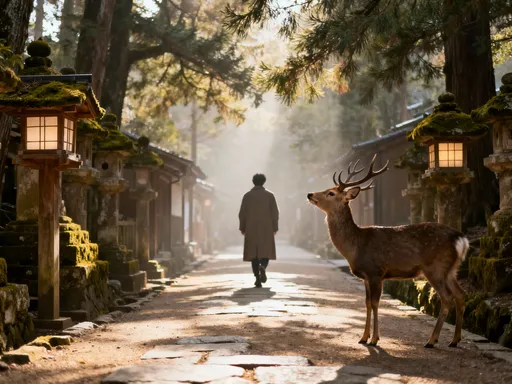
Wandering through Nara, Japan, feels like stepping into a living postcard—centuries-old temples rise beside quiet stone paths, and deer roam freely like guardians of forgotten stories. I didn’t come for checklists or photo ops; I came to feel the silence between history’s breaths. What makes Nara’s landmark buildings so unforgettable isn’t just their age, but how they blend into daily life, inviting slow discovery around every corner. In a world that moves too fast, Nara offers a rare gift: the chance to walk softly through time, where every moss-covered step and sun-dappled shrine whispers of continuity, reverence, and peace. This is not a city to be consumed, but one to be experienced—one breath, one alley, one moment at a time.
The Soul of Wandering: Why Slow Travel Fits Nara Perfectly
Travel has evolved into a pursuit of efficiency—packed itineraries, timed entries, and the constant pressure to see everything in the shortest time possible. But in Nara, this modern rhythm dissolves. The city resists haste. Its quiet streets, shaded groves, and unhurried residents invite a different kind of journey: one of wandering. Wandering is not aimless; it is intentional presence. It means allowing yourself to be drawn down a narrow lane simply because sunlight hits a wooden gate in a certain way, or pausing to watch a deer rest beneath a camphor tree as if time itself has paused with it.
Nara’s compact layout makes it ideal for this mindful exploration. Unlike sprawling metropolises where transit eats up hours, Nara’s most treasured sites are within comfortable walking distance of one another. The city unfolds like a scroll, revealing its secrets gradually. A visitor who rushes from Todai-ji to Kasuga Taisha on a checklist may see the highlights, but misses the soul of the place—the elderly woman arranging flowers at a family shrine, the scent of roasted sweet potatoes drifting from a corner stall, the sound of wooden geta sandals tapping softly on stone.
Wandering allows for serendipity. It is in these unplanned moments that travel becomes transformative. Imagine turning away from the main path near Kofuku-ji and finding a moss-laden stone lantern half-hidden beneath ferns, its surface worn smooth by centuries of rain. Or discovering a small tea house tucked behind a machiya house, where the owner offers a warm cup without a word, simply because you looked like you needed one. These are not experiences that can be scheduled, yet they often become the most cherished memories.
Moreover, slow travel fosters deeper respect for local culture. When you move slowly, you begin to notice patterns—the way temple bells mark the hours, how shopkeepers bow to neighbors, how even tourists learn to lower their voices near sacred spaces. In Nara, history is not behind glass; it is lived. By wandering with awareness, visitors do not just observe tradition—they briefly become part of it.
Todai-ji Temple: More Than Just a Giant Buddha
No symbol captures Nara’s grandeur quite like Todai-ji, home to the Great Buddha, or Daibutsu. Standing before the colossal bronze statue, housed within one of the largest wooden buildings in the world, is an experience that transcends sightseeing. The scale is staggering—the Buddha’s thumb alone is taller than most adults—and yet, the atmosphere is one of calm, not awe through spectacle. The dim light filtering through high wooden beams, the faint scent of incense, and the quiet murmurs of reverence create a space where time seems suspended.
Originally constructed in the 8th century as a statement of imperial and religious power, Todai-ji was part of a nationwide network of provincial temples. Though much of the original complex has been lost to fire and war, the Great Buddha Hall has been faithfully reconstructed multiple times, each effort a testament to cultural resilience. The current structure, while slightly smaller than the original, still spans over 57 meters in length and 50 meters in height. Its massive cypress-wood columns, some leaning slightly with age, speak of endurance rather than perfection.
But Todai-ji is more than an architectural achievement. It is a living temple, a place of daily prayer and ritual. Visitors are not merely observers; they are invited to participate in small ways—ringing the purification bell, offering a silent prayer, or tracing the path of monks who have walked these halls for over a thousand years. The experience is sensory and spiritual, a rare convergence of history, craftsmanship, and faith.
Wandering through the temple grounds reveals quieter corners often missed by hurried tourists. Behind the main hall, a garden of stone lanterns and weathered statues offers a place for reflection. The Nigatsu-do Hall, perched on a hillside within the same complex, provides panoramic views of the city and park below. At Todai-ji, the journey is not just toward the Buddha, but into a deeper understanding of Japan’s spiritual heritage—one that values harmony, impermanence, and quiet devotion.
Kofuku-ji Tower: A Beacon from the Past
Rising gracefully above Nara’s skyline, the five-story pagoda of Kofuku-ji is one of Japan’s most recognizable landmarks. Its tiered roof, curving slightly upward at each edge, cuts a poetic silhouette against the sky. Originally part of a vast temple complex established in the 8th century, Kofuku-ji served as the family temple of the powerful Fujiwara clan. Though only a fraction of the original buildings remain, the pagoda stands as a powerful symbol of Nara’s aristocratic and religious past.
The current structure dates to 1426, rebuilt after earlier versions were destroyed by fire and war. At 50.8 meters tall, it is the second tallest five-story pagoda in Japan, yet its elegance lies not in height, but in proportion and balance. Each story diminishes slightly in size, creating a sense of upward movement, as if the tower were lifting the viewer’s gaze toward the heavens. The golden finial at the top catches the light, glinting like a beacon across the city.
What makes Kofuku-ji especially compelling is its integration with the surrounding Naramachi district. This well-preserved area of traditional merchant houses, or machiya, features narrow lanes, wooden lattices, and tiled roofs that have changed little over centuries. Walking from the temple into Naramachi feels like stepping through a portal into Edo-period Japan. Small craft shops sell hand-dyed textiles, lacquerware, and pottery, often made by local artisans using time-honored techniques.
The neighborhood invites exploration on foot. A quiet alley may lead to a hidden courtyard with a stone basin and bamboo fountain, or a former sake warehouse transformed into a quiet café where matcha is prepared with meticulous care. There are no large tourist crowds here, no souvenir stalls shouting for attention—just the gentle rhythm of daily life. For the wandering traveler, Kofuku-ji is not just a destination, but a starting point—a gateway to a slower, more intimate experience of Nara.
Kasuga Taisha: Where Nature and Architecture Dance
Deep within the forested slopes of Mount Mikasa lies Kasuga Taisha, one of Japan’s most celebrated Shinto shrines. Founded in 768 AD, it is renowned for its vibrant vermilion-lacquered halls and its thousands of stone and bronze lanterns. Unlike the grand scale of Todai-ji, Kasuga Taisha exudes a sense of intimacy and harmony with nature. The path to the shrine winds through a canopy of ancient trees, their roots cradling moss-covered lanterns that seem to have grown from the earth itself.
At peak times, over 3,000 lanterns line the approach and adorn the shrine buildings—lit in full only during the spring and autumn festivals. But even in their stillness, they radiate a quiet magic. Each lantern, donated by worshippers over centuries, bears inscriptions and family crests, linking past and present in a continuous thread of devotion. The vermilion color, symbolic of life and protection in Shinto belief, glows warmly against the greenery, creating a dreamlike contrast.
The shrine’s architecture follows the kasuga-zukuri style, characterized by its simplicity, symmetry, and curved roof with a single ridgepole. The buildings appear delicate, almost floating above the ground on elevated foundations, as if designed to coexist with the forest rather than dominate it. This seamless integration reflects a core Shinto principle: that sacredness resides in nature itself. The surrounding forest is protected as part of the shrine’s spiritual domain, home to countless deer, birds, and insects that move freely through the grounds.
Seasons transform the experience of Kasuga Taisha. In spring, plum and cherry blossoms frame the pathways in soft pinks and whites. Summer brings a dense, cooling green, while autumn sets the hills ablaze with red and gold. Winter, though quieter, offers clarity—the bare branches, the crisp air, and the occasional dusting of snow on the lanterns create a serene, meditative atmosphere. To walk this path is to participate in a rhythm older than memory, where architecture, nature, and spirituality are not separate, but one.
Nigatsu-do Hall: The Hidden Gem Above the City
Tucked away within the Todai-ji complex but often overlooked by mainstream visitors, Nigatsu-do Hall offers one of Nara’s most profound experiences. Perched on a hillside, it requires a climb of several hundred stone steps, each worn smooth by centuries of pilgrims and monks. The ascent is not easy, but it is part of the journey—a physical act of dedication that prepares the mind for what lies ahead.
Once at the top, the reward is immediate. The wooden veranda of Nigatsu-do opens to an uninterrupted view of Nara Park, the city, and the distant mountains. At sunset, the sky fills with color, casting a golden glow over the deer grazing below and the rooftops of temples and homes. The air is still, the city’s noise muffled by distance. In this quiet, the boundary between the human and the divine feels thin.
Nigatsu-do is best known for hosting the Shuni-e ceremony, a Buddhist rite held every March for over 1,200 years. During this event, monks perform rituals of repentance and prayer, including the dramatic fire ceremony known as Otaimatsu, where massive torches are waved from the balcony to purify the world and ward off evil. The hall itself is modest in size, with simple wooden interiors and minimal ornamentation, reinforcing its role as a place of contemplation rather than display.
For the wandering traveler, Nigatsu-do represents the heart of Nara’s spiritual depth. It is not marked by grandeur, but by presence. There are no crowds here, no souvenir shops, no loud announcements—just the creak of old wood, the whisper of wind, and the occasional chime of a distant bell. To sit here, even for a few minutes, is to understand why Nara has been a place of pilgrimage for so long. It is not the destination that matters most, but the stillness found along the way.
Naramachi: The Living Heritage of Merchant Houses
If Nara’s temples speak of the sacred, Naramachi speaks of the everyday. This historic district, once home to merchants, artisans, and sake brewers, preserves the architectural character of Edo-period Japan. Its narrow streets, flanked by traditional machiya houses with latticed windows and tiled roofs, feel like a living museum—yet one where life continues as it always has. These buildings, some over 200 years old, have been carefully restored and repurposed into cafes, craft studios, and small museums, ensuring their survival without freezing them in time.
Walking through Naramachi is an exercise in discovery. One moment you might pass a shop selling hand-carved wooden combs, the next a tiny tea house where an elderly couple shares a quiet afternoon. Courtyards hidden behind wooden gates hint at private worlds—stone gardens, bamboo fences, the soft trickle of water. The pace is slow, the atmosphere unhurried. There are no traffic lights, no neon signs—just the occasional bicycle bell and the rustle of leaves.
What makes Naramachi special is its authenticity. Unlike reconstructed heritage districts in other cities, this neighborhood is not a performance for tourists. Residents live here, run businesses here, and care for these buildings as part of their identity. Some families have lived in the same house for generations, maintaining traditions passed down through decades. A local craftsperson might demonstrate how to weave indigo-dyed fabric, not for profit, but because it is what they know and love.
Visitors are welcomed not as consumers, but as quiet observers. A cup of tea offered at a family-run café, a nod from a shopkeeper arranging goods in the window—these small gestures create a sense of connection. Naramachi teaches that heritage is not just about preserving old buildings, but about sustaining the way of life within them. To wander here is to experience a version of Japan that is gentle, rooted, and deeply human.
How to Wander with Purpose: Practical Tips for a Meaningful Journey
To truly experience Nara, one must learn to wander with intention. This does not mean abandoning all plans, but rather making space for the unplanned. Begin with comfortable footwear—Nara’s charm lies in its walkability, and many of its treasures are found off the main roads. Wear layers, as mornings can be cool and afternoons warm, especially in spring and autumn, the ideal seasons to visit.
While maps and guides are useful, do not be afraid to set them aside. Allow yourself to get slightly lost. Some of the most memorable moments happen when you turn down a lane simply because it looks inviting. Visit major sites like Todai-ji and Kasuga Taisha early in the morning or late in the afternoon to avoid the midday crowds. These quieter hours offer a more personal experience, with softer light and fewer distractions.
Respect is central to the Nara experience. Bow slightly when entering temple grounds, avoid loud conversations near sacred spaces, and never feed the deer anything other than the official crackers sold on-site. These animals are protected, and their health depends on a careful diet. When taking photographs, be mindful of others—avoid blocking pathways or using flash inside buildings.
Most importantly, allow for pauses. Sit by the pond in Nara Park and watch the deer nap in the sun. Stand beneath a maple tree and listen to the wind. Let the sound of temple bells mark your rhythm instead of your itinerary. Bring a small notebook to sketch or write, not to document every moment, but to anchor yourself in it. These acts of stillness are not idle—they are the essence of mindful travel.
In a world that glorifies speed and productivity, Nara offers a different measure of value: depth over distance, presence over performance. The city does not shout; it whispers. Its temples do not dazzle; they endure. To wander through Nara is to remember that some of the most profound experiences come not from doing, but from being. Here, time does not stand still—it breathes, gently, in harmony with those who walk its ancient paths.